
Architecture schools teach you how to design buildings. Very few teach you how to run a business.
The first decade of practice was a roller coaster of exceptional highs and stomach-churning lows. During the good times, we built a reputation for holiday homes and unique residential projects across New Zealand. During the difficult times, we discovered how vulnerable businesses can be to forces completely outside their control.
The first major shock came early. The 1997 financial crisis slowed the local economy and nearly brought us undone. Just as we recovered and grew to a team of four, the 2007 Global Financial Crisis struck. Within weeks, around ninety-five percent of our projects stopped. Holiday homes and discretionary spending disappeared overnight. Survival required quick thinking and a willingness to adapt. Back then I called it panic. Today people call it pivoting.
We redirected our efforts into commercial and educational projects and found opportunities where others only saw uncertainty. Looking back, every major disruption became a catalyst for growth. It forced us to become more diverse, more adaptable and less reliant on any one market sector.
One of the most important lessons came much later. For seventeen years I treated the business almost like a hobby. I worked fifty-hour work weeks, spent Saturdays on administration and used Sundays preparing for Monday. I resisted business planning because I thought it distracted from architecture. Eventually, with the help of a business coach, I learned that great design and great business are not opposing forces. In fact, a well-run business is what gives you the freedom to design well.
Developing meaningful values changed the way we operated:
Open ears and open minds
Lifelong learners
We see things differently
Design is in our DNA
Quality relationships
Design for the future.
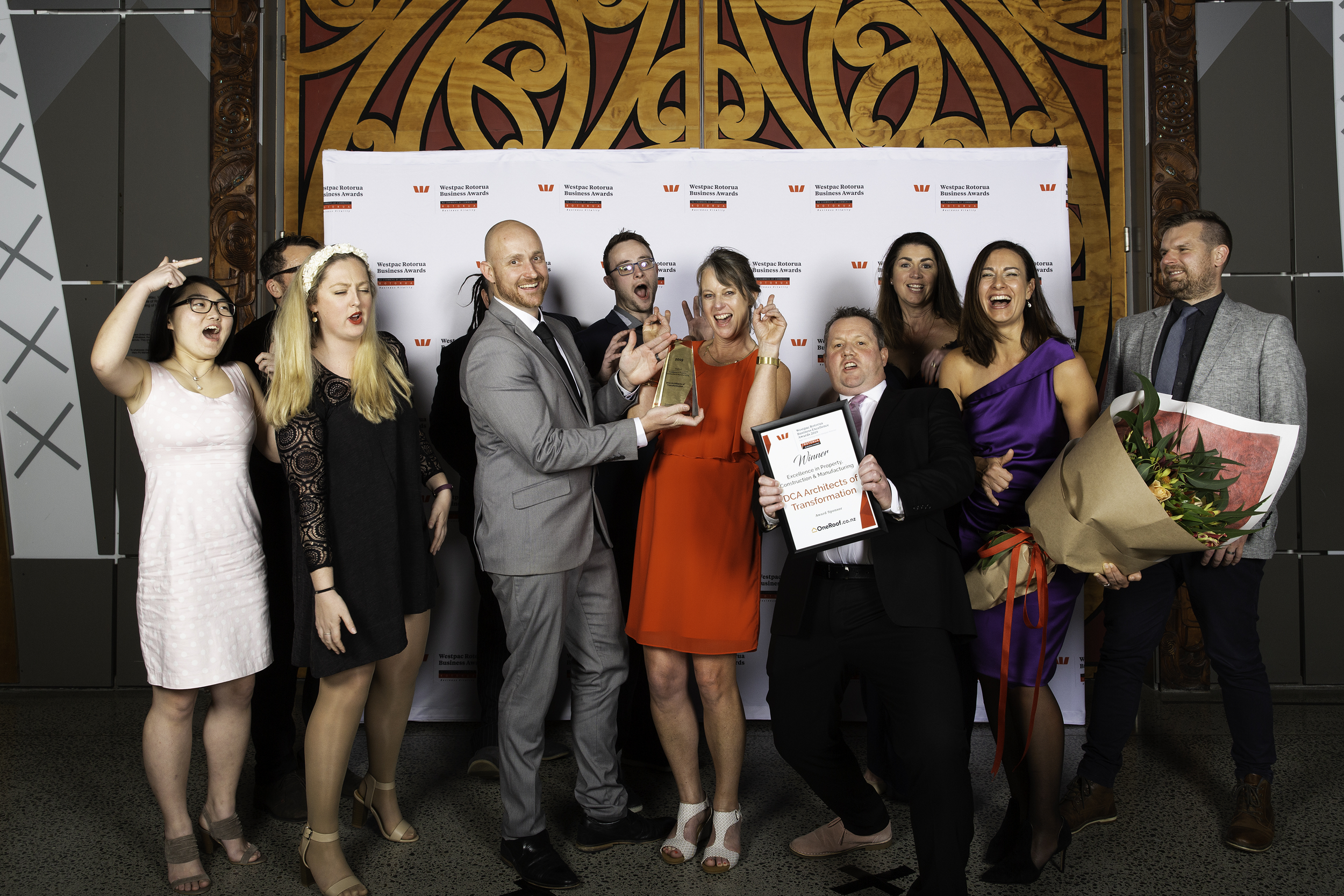
Those values became decision-making tools rather than words on a wall. The hard work we put into creating a “business of architecture”, as opposed to simply “practising architecture”, paid off. In 2019, we won the Supreme and Excellence in Property and Construction category for the 2019 Westpac Rotorua Chamber of Commerce Business awards.
The truth is that sustainable architecture practice requires more than creativity. It requires leadership, financial discipline, strategic thinking and great people. Buildings may be our product, but relationships are our business. Once I understood that distinction, the practice began to evolve from a small entrepreneurial venture into something far more enduring.
Every practice is different, but I’d encourage any architect running a small firm to ask a few honest questions. Do you have a written plan, or just a full inbox? Are your values guiding decisions, or decorating the wall? Are you working on the business, or only in it? Those questions changed everything for us.
In Part 3, I’ll turn to the part of architecture I love most: the people it serves.